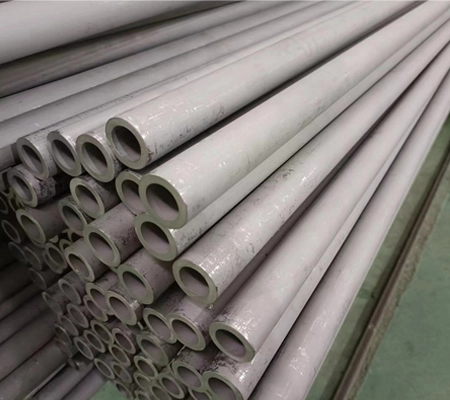

ASTM A376 is specifically designed for extreme high-temperature service in central power stations. Through strict heat-treatment requirements and specialized chemistry (such as high-carbon H-grade stainless steels), A376 seamless pipes effectively resist high-temperature metal creep. This article explains the heat-treatment requirements and the engineering principles behind creep resistance.
ASTM A376 is the standard specification for seamless austenitic steel pipe intended specifically for high-temperature central-station service. Unlike the more general ASTM A312 specification, which covers austenitic stainless steel pipe for a broad range of high-temperature and corrosive applications, ASTM A376 is written for the extreme conditions found in central power-station steam systems. Operating temperatures typically range from 500 °C to 800 °C or higher, where continuous exposure to high pressure and thermal stress demands materials engineered to resist long-term deformation.
The specification focuses exclusively on seamless construction and imposes tighter controls on chemistry, grain size and heat treatment than many general-purpose stainless standards. When sourcing materials for central power stations, choosing reliable stainless steel pipe suppliers is critical to ensure that every length of pipe meets the elevated-temperature performance and documentation requirements demanded by these critical systems.
Metal creep is the slow, permanent deformation that occurs when a material is subjected to constant stress at elevated temperature over long periods. In power-station superheater and main steam piping, even a small amount of creep strain accumulated over years of service can lead to dimensional changes, joint misalignment or, in extreme cases, rupture. Preventing or minimizing creep is therefore a primary design objective for high-temperature piping.
ASTM A376 addresses this challenge through the use of high-carbon “H” grades such as TP304H and TP316H. The elevated carbon content (typically 0.04 % minimum) promotes the formation of stable carbides that pin grain boundaries and impede the dislocation movement responsible for creep. In addition, the specification requires a controlled grain size (usually ASTM No. 7 or coarser) because larger grains reduce the total grain-boundary area available for sliding. The combination of higher carbon and optimized grain size significantly improves creep strength compared with standard low-carbon or dual-certified grades.
The practical result is higher allowable stresses at elevated temperature. The following comparison illustrates the difference in approximate allowable stress values at 600 °C for common grades:
| Grade | Approximate Allowable Stress at 600 掳C (MPa) | Key Feature |
| TP304 / TP304L | Lower (reference baseline) | Standard carbon or low-carbon |
| TP304H | Noticeably higher | High carbon + controlled grain size |
| TP316 / TP316L | Moderate | Molybdenum addition, standard carbon |
| TP316H | Higher than TP316 | High carbon + controlled grain size |
By specifying the H grades under ASTM A376, designers can utilize higher allowable stresses, often permitting thinner walls or longer design lives under the same operating conditions.
Solution annealing is mandatory for ASTM A376 pipe and is performed at temperatures typically above 1040 °C. At this temperature the carbon and alloying elements dissolve into a homogeneous austenitic matrix. Immediately after the high-temperature soak, the pipe must be cooled rapidly—usually by water quenching or another method that achieves an equivalent cooling rate—so that the dissolved elements remain in solid solution and do not precipitate as continuous grain-boundary carbides.
From a manufacturing perspective, insufficient cooling rate is one of the most serious process risks. If the pipe cools too slowly through the critical temperature range, chromium-rich carbides precipitate along the grain boundaries, depleting the adjacent matrix of chromium. The resulting sensitized microstructure is highly susceptible to intergranular corrosion and can also reduce creep ductility. In high-temperature, high-pressure steam service such a condition can lead to premature cracking or catastrophic rupture. Controlled furnace atmospheres, precise time-at-temperature records and verified quench effectiveness are therefore essential elements of any quality system producing ASTM A376 pipe.
Selecting the correct pipe material is only one part of a reliable high-temperature system. Every component in the line—flanges, fittings and valves—must possess equivalent temperature and pressure capability so that the system as a whole can accommodate thermal expansion, cyclic loading and continuous high-pressure steam without creating weak links.
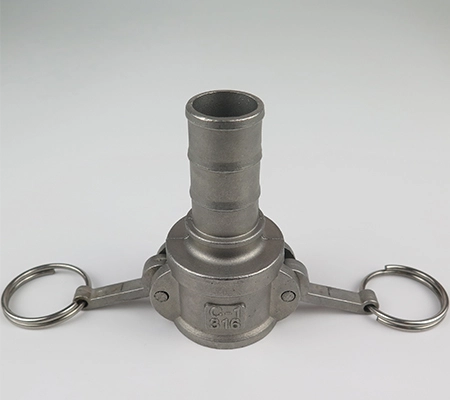
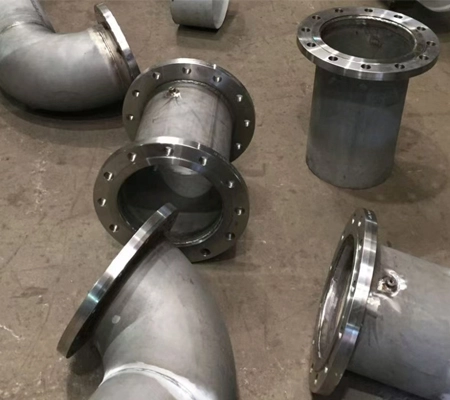
To maintain joint integrity under thermal expansion, A376 pipes are typically butt-welded using heavy-duty flanges. As experienced weld neck flanges manufacturers, we recommend matching the flange material grade and pressure class to the pipe so that the entire joint remains within the same allowable-stress regime at operating temperature. For branch connections and smaller-diameter take-offs, working closely with certified forged fittings manufacturers ensures that the socket-weld or butt-weld components can withstand high steam pressures and the thermal stresses generated during start-up and shut-down cycles. For shutting off high-temperature steam, sourcing from reputable flanged gate valve suppliers is just as important as the pipe itself; the valve body, bonnet and trim must be rated for the full design temperature and pressure of the ASTM A376 piping system.
Because the consequences of material failure in central-station service are severe, ASTM A376 pipe undergoes a rigorous inspection regime before release. Ultrasonic testing (UT) is performed to detect internal and surface discontinuities that could act as initiation sites for creep cracks. Grain-size examination is mandatory for the H grades; the measured grain size must satisfy the limits specified in the standard, confirming that the microstructure is optimized for creep resistance. Every heat is supplied with an EN 10204 3.1 material test certificate that records actual chemical composition, mechanical properties, heat-treatment parameters and the results of all non-destructive examinations. Additional tests such as intergranular-corrosion evaluation or elevated-temperature tensile testing may be performed when required by the project specification.
These quality-assurance steps provide documented evidence that the pipe leaving the mill possesses the chemistry, microstructure and integrity needed for long-term high-temperature service.
When your project requires ASTM A376 austenitic seamless pipe for central-station or other extreme high-temperature service, accurate material selection and complete documentation are essential. Contact Kidy Pipeline’s Engineering Team with your design conditions, preferred grade (TP304H, TP316H or other), size range and any supplementary testing requirements. You may also upload your bill of materials (BOM) or isometric drawings for a rapid, project-specific quotation.
Contact Kidy Pipeline’s Engineering Team or Upload Your BOM for a Quick Quote to receive technical support and a competitive offer for ASTM A376 high-temperature seamless stainless steel pipes manufactured to international standards.
 sherlly1@126.com
  +86-577 568 747 28
  15814844070
 English