sherlly1@126.com
  +86-577 568 747 28
  15814844070
 English


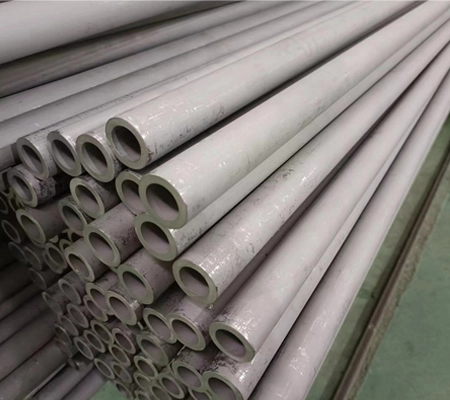
An EN 10204 3.1 inspection certificate is one of the most important quality documents supplied with seamless stainless steel pipe. It records the product identity, material grade, heat number, chemical composition, mechanical properties, heat-treatment condition and specified inspection results.
However, receiving a certificate marked “3.1” does not automatically prove that the delivered pipe satisfies every purchase-order requirement. Buyers must verify that the certificate matches the ordered material, the physical pipe markings and the applicable standard editions.
This guide explains how procurement, engineering and quality-control teams can review an EN 10204 3.1 Material Test Certificate, commonly called an MTC or Mill Test Certificate, before approving seamless stainless steel pipe.
What an MTC Proves—and What It Does Not
EN 10204 defines different types of inspection documents for metallic products. A Type 3.1 inspection certificate contains a declaration that the supplied products comply with the order and reports results from specific inspection.
The certificate is validated by a manufacturer's authorized inspection representative who is independent of the manufacturing department. Buyers should confirm that the document identifies the responsible organization and contains an appropriate name, signature, stamp or controlled electronic authorization.
What a 3.1 Certificate Can Help Demonstrate
The material description stated by the manufacturer
The standard and grade against which the material was assessed
The relationship between the product and its heat, lot or batch
Reported chemical analysis results
Reported mechanical test results
The stated heat-treatment condition
Specified test and inspection results
The identity of the organization issuing the certificate
What a 3.1 Certificate Does Not Prove by Itself
A 3.1 certificate should not be treated as an unconditional guarantee of suitability, authenticity or project compliance. By itself, it does not prove:
That the physical pipes received are the pipes described on the certificate
That every project-specific requirement appears on the certificate
That the material is suitable for the buyer's operating conditions
That all values were independently witnessed by a third party
That dimensions remain within tolerance after transportation or processing
That the document has not been altered or separated from its traceability chain
That tests not listed on the certificate were performed
An MTC review must therefore be combined with purchase-order review, marking inspection, dimensional inspection and, where required, independent testing or third-party inspection.
When evaluating stainless steel pipe manufacturers, buyers should request a sample certificate before supplier approval. The sample helps determine whether the manufacturer's normal document format contains the traceability and test information required by the project.
Traceability Fields to Check First
Begin with product identity and traceability before reviewing individual chemistry or mechanical values. Test results have limited value if they cannot be connected to the delivered pipes.
| MTC Field | What to Verify | Why It Matters |
|---|---|---|
| Manufacturer | Legal name, address and identifiable document issuer | Establishes who manufactured or certified the product |
| Purchaser or consignee | Name matches the transaction documents where applicable | Helps connect the certificate to the commercial order |
| Purchase order | PO number and relevant line-item number | Links the certificate to the buyer's requirements |
| Certificate number | Unique, readable and consistent across document pages | Supports document control and verification |
| Product description | Seamless pipe, not welded pipe, tube or another product type | Confirms the manufacturing form ordered |
| Material standard | Correct standard, grade and contractually required edition | Defines chemistry, properties, manufacturing and testing requirements |
| Dimensions | OD or NPS, schedule or wall thickness, and length | Confirms that results are assigned to the correct pipe size |
| Heat number | Matches pipe markings, packing list and inspection records | Connects the pipe to the steelmaking heat and chemical analysis |
| Lot or batch number | Present when mechanical testing or processing is organized by lot | Links the product to heat treatment and test sampling |
| Quantity and weight | Reasonably reconciles with the packing list and shipment | Helps detect missing or unrelated certificate pages |
| Heat treatment | Method, condition and any required recorded parameters | Heat treatment can directly affect corrosion resistance and properties |
| Authorized validation | Name, position, signature, stamp or controlled digital approval | Indicates formal validation of the inspection certificate |
How Heat Numbers Link to Pipe Markings
A heat number identifies a specific steelmaking heat. The number reported on the MTC should also appear on the pipe marking or on an approved traceability label connected to the pipe bundle.
A basic traceability chain should be possible:
Purchase-order line item identifies the required product.
MTC identifies the product, dimensions, grade and heat number.
Packing list identifies the shipped pieces or bundles.
Pipe or bundle markings carry the corresponding heat number.
Test reports reference the same heat, lot or product identity.
If a shipment contains several heat numbers, the certificate should clearly separate the chemistry and test results for each applicable heat or test lot.
Heat Number and Lot Number Are Not Always the Same
A heat number normally relates to a steelmaking batch. A lot number may group products processed or tested under defined conditions. One heat can sometimes be divided into several test lots because of differences in size, heat treatment or processing history.
Buyers should not assume that one chemical analysis result automatically covers every mechanical test lot in a shipment. The certificate should make the relationship between heat numbers, lot numbers and test results understandable.
How to Review Chemistry and Mechanical Results
Step 1: Confirm the Complete Grade Designation
Check that the grade on the MTC exactly matches the purchase order. Similar designations may have different chemical or mechanical requirements. For example, a low-carbon “L” grade should not be accepted as interchangeable with another grade without engineering approval.
The MTC should identify all applicable specifications when the purchase order requires dual certification. Dual certification should be supported by results satisfying both specified requirements, not only by placing two grade names in the product description.
Step 2: Check the Standard and Edition
Compare the reported material standard with the standard specified in the purchase order. If the contract identifies a particular edition or addendum, verify that the certificate references the correct version or obtain written clarification from the supplier.
Buyers reviewing ASTM A312 products can also consult KIDY Pipeline's guide to ASTM A312 stainless steel pipe before comparing the MTC with the project specification.
Step 3: Compare Every Chemical Element
Do not check only chromium and nickel. Review every chemical element required by the applicable grade, including maximum limits and specified ranges.
Depending on the grade, the chemistry table may include:
Carbon
Manganese
Silicon
Phosphorus
Sulfur
Chromium
Nickel
Molybdenum
Nitrogen
Other grade-specific alloying elements
Confirm whether the reported value represents heat analysis or product analysis. If the project requires a separate product analysis, positive material identification or additional corrosion-related calculations, these requirements should appear in the order and supporting document package.
Step 4: Review Mechanical Test Results
Common mechanical results reported for seamless stainless steel pipe include tensile strength, yield strength, elongation and hardness. Depending on the specification and service conditions, impact testing, flattening, flaring or other tests may also be required.
| Test Item | Review Question |
|---|---|
| Tensile strength | Does the reported result meet the required minimum or range? |
| Yield strength | Is the reported test method and result consistent with the specification? |
| Elongation | Is the result linked to the correct specimen type and gauge length where required? |
| Hardness | Is the correct hardness scale used, and is the result within the permitted limit? |
| Impact test | Are specimen orientation, test temperature and absorbed-energy values recorded? |
| Flattening or flaring | Is the acceptance result recorded for the correct product form and lot? |
A result should not be accepted merely because it is marked “Pass.” Where numerical reporting is required, the certificate should provide the actual measured result and its unit.
How Tests and Heat Treatment Should Be Recorded
Heat-Treatment Information
Stainless steel pipe may require solution annealing or another defined heat-treatment condition under the applicable material specification. The MTC should identify the treatment clearly enough for the reviewer to determine whether it corresponds to the ordered grade and product condition.
Depending on the contract, the document package may need to include:
Heat-treatment method or delivered condition
Heat-treatment temperature or permitted range
Holding time where required
Cooling method
Furnace or batch identification
Heat-treatment chart
Temperature-instrument calibration records
A 3.1 certificate may summarize the heat treatment without including the complete furnace record. If charts or calibration records are contractually required, they should be requested as separate documents.
Non-Destructive and Pressure Tests
The certificate should state the tests performed rather than using a vague phrase such as “all tests satisfactory.” Depending on the product specification and purchase order, the scope may include:
Hydrostatic testing
Ultrasonic testing
Eddy current testing
Surface examination
Positive material identification
Intergranular corrosion testing
Dimensional and visual inspection
Review the test method, referenced procedure or standard, acceptance criteria, test coverage and result. If an alternative test method was used instead of the default method, confirm that the substitution was allowed by the specification and approved by the purchaser where necessary.
Supplementary Requirements
Project specifications may require tests beyond the base material standard. These supplementary requirements are not automatically included simply because the material is supplied with a 3.1 certificate.
The purchase order should identify each supplementary requirement, and the MTC or supporting test report should provide evidence that it was completed.
Illustrative EN 10204 3.1 MTC Review Example
The following example is fictional and provided only to demonstrate a review method. It is not an actual KIDY Pipeline certificate, compliance statement or current product record.
| Certificate Field | Illustrative Entry | Buyer Review Action |
|---|---|---|
| Certificate type | EN 10204 Type 3.1 | Confirm Type 3.1 is required by the purchase order |
| Certificate number | DEMO-316L-0001 | Check that the same number appears on all pages |
| Product | Seamless stainless steel pipe | Confirm that seamless construction was ordered |
| Material | ASTM A312 TP316L | Compare grade and standard with the PO |
| Dimensions | NPS 4, Schedule 40S | Verify dimensional standard, OD, wall and length |
| Heat number | H316L-12345 | Match it to the pipe and bundle markings |
| Lot number | L24001 | Confirm the test results apply to this lot |
| Quantity | 48 pieces | Reconcile with the packing list and received quantity |
| Heat treatment | Solution annealed | Check whether temperature records are also required |
| Chemical analysis | Numerical results listed by element | Compare every result with the contract standard |
| Mechanical properties | Tensile, yield, elongation and hardness reported | Check values, units and applicable acceptance limits |
| NDT | Ultrasonic examination: accepted | Verify method, coverage and acceptance standard |
| Pressure test | Hydrostatic test: accepted | Confirm the test satisfies the ordered specification |
| Authorized validation | Quality representative name and digital signature | Confirm the signer and issuing organization are identifiable |
Example Chemistry Review Worksheet
Buyers can use a worksheet like the following. Insert the exact limits from the contractually applicable standard instead of relying on a generic online grade table.
| Element | Contract Requirement | Reported Result | Review Status |
|---|---|---|---|
| Carbon | Insert applicable maximum | 0.021% | Compare with specified limit |
| Chromium | Insert applicable range | 16.78% | Compare with specified range |
| Nickel | Insert applicable range | 10.25% | Compare with specified range |
| Molybdenum | Insert applicable range | 2.08% | Compare with specified range |
| Other elements | Insert all required limits | Record all reported results | Do not leave required elements unchecked |
All values in this example are fictional. They must not be used as purchasing limits or as evidence that a particular product complies with a material specification.
A Practical MTC Review Workflow
Start with the purchase order. Create a checklist containing the required product form, standard, grade, edition, dimensions, heat treatment, tests, documents and certification type.
Confirm document identity. Check the certificate number, issue date, page count, issuing organization and authorized validation.
Match the product description. Verify that the certificate describes seamless stainless steel pipe in the ordered grade and dimensions.
Establish traceability. Match the heat and lot numbers across the MTC, pipe markings, packing list and supporting reports.
Check chemical composition. Compare every reported element with the limits in the contractually applicable standard.
Check mechanical properties. Review results, units, specimen requirements, test frequency and acceptance criteria.
Review heat treatment. Confirm the reported condition and request furnace records when required by the contract.
Review NDT and pressure testing. Confirm method, coverage, procedure, acceptance criteria and reported result.
Reconcile quantity and dimensions. Compare the certificate with the packing list and physical inspection results.
Record exceptions before release. Submit unclear, missing or conflicting information to the supplier for written clarification before approving the material.
EN 10204 3.1 MTC Red Flags
The following issues do not always prove that a certificate is invalid, but they require clarification before material approval:
The heat number on the MTC does not match the pipe marking.
The certificate describes welded pipe when seamless pipe was ordered.
The material grade or standard differs from the purchase order.
The standard edition is missing when the contract requires a specific edition.
The dimensions or quantity cannot be reconciled with the packing list.
Several heats are listed, but test results are not assigned to individual heats or lots.
Chemical elements required by the grade are missing.
Mechanical results are reported without units.
Required numerical results are replaced by a generic “Pass” statement.
Heat treatment is missing or described only as “as required.”
Required NDT methods, coverage or acceptance criteria are unclear.
Supplementary requirements from the purchase order are not addressed.
The inspection representative or issuing organization cannot be identified.
Certificate pages use inconsistent numbers, fonts, layouts or revision dates.
Values appear duplicated across unrelated heats without explanation.
Corrections or overwritten fields are not controlled or authorized.
When a discrepancy is found, request a corrected document, an explanation from the issuing quality department or additional verification. Do not manually edit a supplier's MTC to make it match the purchase order.
Example Seamless Stainless Steel Pipe Document Package
A complete project file may contain more than the EN 10204 3.1 certificate. The required contents should be agreed during quotation or purchase-order review.
| Document Section | Possible Contents |
|---|---|
| Commercial traceability | Purchase order, packing list and delivery note |
| Material certification | EN 10204 3.1 certificate organized by heat and lot |
| Manufacturing records | Manufacturing route, process records and approved procedures |
| Heat-treatment records | Furnace charts, batch identification and instrument calibration |
| Mechanical testing | Tensile, hardness, impact or supplementary test reports |
| NDT records | Procedures, personnel qualifications and examination reports |
| Pressure testing | Hydrostatic or approved alternative test records |
| Dimensional inspection | OD, wall thickness, length, straightness and visual inspection results |
| Special testing | PMI, corrosion testing, ferrite measurement or other project tests |
| Third-party inspection | Release notes, inspection reports and signed witness records |
| Shipping records | Marking list, photographs, packaging records and shipment documents |
Request the proposed document index before production begins. This gives the supplier time to prepare required records and reduces the risk of discovering missing documentation after the pipes are ready for shipment.
Frequently Asked Questions
What is the difference between EN 10204 3.1 and 3.2?
A Type 3.1 certificate is validated by the manufacturer's authorized inspection representative who is independent of the manufacturing department. Type 3.2 involves validation by the manufacturer's authorized inspection representative and either the purchaser's authorized inspection representative or an inspector designated by applicable official regulations. The required document type should be stated in the purchase order.
Does an EN 10204 3.1 certificate require third-party inspection?
Not automatically. Type 3.1 is issued and validated through the manufacturer's authorized inspection function. If independent witnessing, document endorsement or third-party verification is required, it must be specified separately or addressed through the required certification arrangement.
How do heat numbers link to pipe markings?
The heat number reported on the MTC should appear on the pipe, bundle tag or approved traceability label. The same number should also be traceable through the packing list and supporting test records.
Can several pipe sizes appear on one MTC?
Yes, provided the document clearly identifies the applicable heat, lot, size, quantity and results for each product group. The relationship must be understandable and consistent with the applicable test-lot rules.
Which missing fields require clarification?
Clarification is normally required when the certificate is missing the grade, standard, heat number, dimensions, heat-treatment condition, required chemical or mechanical results, specified test results, certificate type or authorized validation. Project-specific requirements may make additional fields mandatory.
Is an MTC enough to approve seamless stainless steel pipe?
Not always. Approval may also require dimensional inspection, visual examination, marking verification, supporting test reports, third-party release and confirmation that the complete document package matches the purchase order.
What should buyers do if the MTC and pipe marking do not match?
Segregate the affected material and request written clarification from the supplier. Do not approve the pipes until a reliable traceability relationship has been established or the material has been reverified through an agreed inspection process.
Review the Certificate Against the Purchase Order and Physical Pipe
An EN 10204 3.1 certificate is valuable only when its information is complete, technically correct and traceable to the delivered material. Reviewers should begin with the product identity, standard, grade, dimensions, heat number and lot number before checking chemistry, mechanical properties, heat treatment and inspection results.
The applicable stainless steel seamless pipe specification and purchase order should remain the basis of acceptance. If a field is unclear or inconsistent, obtain written clarification instead of assuming compliance from the presence of a 3.1 heading.