sherlly1@126.com
  +86-577 568 747 28
  15814844070
 English


Seamless line pipe is used in oil and gas projects where the specified diameter, wall thickness, pressure, temperature, fluid composition or project requirements make seamless manufacture an appropriate option. Typical procurement packages may include gathering lines, flowlines, injection lines, process connections and other small- or medium-diameter pipeline sections.
Selecting line pipe requires more than naming a grade. The material requisition should define the governing specification, product specification level, dimensions, service conditions, manufacturing route, testing, traceability, end finish, documentation and packing requirements.
This article focuses on preparing and reviewing an oil and gas line pipe procurement package. Final material selection and design acceptance must be completed by the responsible project engineering organization.
Where Seamless Line Pipe Is Used
Line pipe transports oil, gas, water and other production fluids between wells, processing equipment, storage facilities and distribution systems. The exact service boundary depends on the project design code, line-class definition and owner specification.
Seamless products may be considered for:
Oil and gas gathering lines
Wellsite flowlines
Gas-lift and injection lines
Produced-water lines
High-pressure process connections
Short pipeline sections near equipment
Compressor and pumping-station piping
Fuel-gas and utility lines
Subsea or offshore project components
Sour-service and low-temperature applications when appropriately specified
When Is Seamless Preferred for Smaller Diameters?
Seamless manufacture is frequently evaluated for smaller-diameter or heavy-wall requirements where the required grade and dimensions are commercially available. It may also be specified by the owner, engineering contractor or line-class specification.
Possible project reasons include:
A requirement to avoid a longitudinal manufacturing seam
Heavy-wall dimensions for high-pressure service
Small quantities of several pipe sizes
Established owner specifications for critical service
Availability of qualified seamless production routes
Compatibility with project-approved fittings and components
Seamless construction does not automatically provide a higher allowable pressure or eliminate the need for inspection. Pressure capability must still be calculated using the governing design code, material properties, temperature, nominal wall, manufacturing tolerance and required allowances.
Seamless vs. Welded Line Pipe Is a Project Decision
Both seamless and welded line pipe can be used successfully when they comply with the applicable specification and project requirements. The decision can depend on diameter, wall thickness, quantity, manufacturing availability, lead time, inspection scope and owner approval.
Buyers should avoid converting a welded line pipe requirement to seamless—or a seamless requirement to welded—without engineering authorization. The product form is part of the approved material requisition.
Procurement teams can review additional manufacturing differences in KIDY Pipeline's article on seamless steel pipe vs. welded steel pipe.
Specify Grade, Dimensions and End Finish
State the Complete Line Pipe Specification
A line pipe inquiry should identify the complete material standard, grade, product specification level and contract edition. Common grade designations may include Grade B, X42, X52, X60, X65 or another project-approved grade.
Grade strength alone does not define the full product. The same grade name can be associated with different testing, chemistry, toughness, traceability and documentation requirements depending on the specified product level and project supplements.
The purchase description should state:
Applicable line pipe standard and contract edition
Grade
Product specification level or equivalent quality level
Seamless manufacturing route
Required heat-treatment condition
Service designation, including sour or non-sour service
Project material specification and datasheet
Required supplementary tests
Specify OD and Wall Thickness Clearly
Line pipe is commonly ordered by actual outside diameter and specified wall thickness. If NPS and schedule are used, the applicable dimensional standard should also be identified.
Include:
Outside diameter
Specified nominal or minimum wall thickness
OD tolerance
Wall-thickness tolerance
Ovality tolerance
Straightness requirement
Fixed or random length
Length tolerance
The selected wall must account for pressure design, temperature, corrosion allowance, erosion allowance and permitted negative manufacturing tolerance. The supplier should not be expected to determine the final design wall from operating pressure alone.
Define the Required Length
State whether the pipe will be supplied in random lengths, approximate lengths or fixed lengths. A fixed-length order should include the permitted positive and negative variation.
Also clarify:
Whether end preparation is included within the finished length
Whether short lengths are permitted
Whether individual pipe-length measurement is required
How the measured length will be reported
Whether pipe numbers must be linked to individual lengths
Specify End Finish
Common end conditions include plain ends, beveled ends and threaded ends. The required finish depends on the field joining method.
For beveled ends, the material requisition should define:
Bevel angle and tolerance
Root face or land dimension
Internal taper or counterbore requirement
End squareness
Maximum permitted burr
End-area OD and ovality limits
Required protective caps
Generic instructions such as “standard bevel” can create uncertainty when the project has a specific automatic-welding or field-fit-up requirement.
Example Material Requisition Description
Seamless line pipe, project-specified standard and contract edition, Grade X52, specified product level, outside diameter 168.3 mm, nominal wall thickness 12.7 mm, fixed length 12,000 mm with stated tolerance, beveled ends, sour-service requirements as listed in the project material specification, external temporary protective coating, internal cleanliness control and project-specific identification.
This fictional description is provided only to demonstrate the required structure. The grade, dimensions and testing requirements must be determined for the actual project.
Testing and Traceability Requirements
Testing requirements should be agreed before production begins. A general instruction such as “test according to standard” may not include all supplementary examinations required by the owner or engineering contractor.
Chemical and Mechanical Testing
The material certificate and supporting records may need to report:
Heat chemical analysis
Product analysis where specified
Tensile strength
Yield strength
Elongation
Hardness
Flattening or bend-test results where applicable
Charpy impact-test results where required
Other project-specific mechanical tests
Test frequency should be linked to the defined heat, lot, size and heat-treatment condition. If one heat is divided into several test lots, the certificate should clearly show which results apply to each lot.
Non-Destructive Testing
Seamless pipe may require full-length non-destructive examination according to the material standard and project specification. The inquiry should identify:
Required NDT method
Full-length or defined-zone coverage
Referenced test procedure
Reference standard or calibration notch
Acceptance criteria
Pipe-end inspection requirements
Operator qualification requirements
Required report format
Possible examination methods include ultrasonic testing, electromagnetic inspection and surface examination. The correct method depends on the specification, material, size and defect orientation to be detected.
Hydrostatic Testing
The material requisition should state whether mill hydrostatic testing is required and identify any project-specific test pressure, holding time or reporting requirement.
A mill hydrostatic test confirms the pipe against the specified product requirement. It does not replace pressure testing of the completed pipeline system under the governing construction code.
Dimensional and Visual Inspection
Dimensional inspection can include:
Outside diameter
Wall thickness
Ovality
Straightness
Length
Bevel geometry
End squareness
Internal and external surface condition
The Inspection and Test Plan should define the sampling frequency, measurement points, approved gauges and acceptance rules. For critical dimensions, buyers may require actual numerical results rather than a general “accepted” statement.
Heat and Pipe-Level Traceability
Traceability should connect the delivered pipe to its heat, test lot and documentation. Depending on the project, each pipe may require a unique number.
A practical traceability chain includes:
The material requisition and purchase-order line item
The pipe manufacturing and heat-treatment lot
The heat number and test results
The individual pipe or bundle identification
The inspection certificate and supporting reports
The packing list and shipping documents
If markings become unreadable or are removed during cutting, the project procedure should define how identification will be transferred and controlled.
Sour-Service and Low-Temperature Questions
What Must Be Defined for Sour Service?
“Sour service” should not appear as an undefined note in the purchase order. The project engineering team should provide the applicable sour-service specification, environmental inputs and required qualification tests.
Relevant data can include:
Hydrogen sulfide partial pressure
Total system pressure
Operating and design temperature
Fluid pH
Chloride concentration
Water phase and water chemistry
Carbon dioxide content
Elemental sulfur or other contaminants
Expected tensile stress and fabrication condition
Sour environments may require evaluation of sulfide stress cracking, hydrogen-induced cracking, stress-oriented hydrogen-induced cracking and other hydrogen-related damage mechanisms.
Sour-Service Testing
Depending on the owner specification and service environment, the procurement package may require:
Hydrogen-induced cracking testing
Sulfide stress cracking testing
Restricted hardness limits
Chemical composition controls
Carbon-equivalent or related weldability limits
Inclusion or cleanliness controls
Metallographic examination
Additional traceability and test reporting
A grade designation alone does not confirm sour-service suitability. The material, manufacturing route, heat treatment, hardness and test results must satisfy the applicable project requirements.
Low-Temperature Service
For low-temperature pipelines, the engineer should define the minimum design metal temperature and required toughness criteria. Impact-testing requirements may depend on grade, wall thickness, pipe size, design code and project fracture-control philosophy.
The purchase order should state:
Impact-test temperature
Specimen orientation
Required specimen size
Minimum average absorbed energy
Minimum individual absorbed energy
Shear-area or lateral-expansion criteria where applicable
Test frequency
Treatment of subsize specimens
Where required by the project, drop-weight tear testing or other fracture-control testing should be specified separately. It should not be assumed to be included with standard Charpy testing.
Do Not Combine Sour and Low-Temperature Requirements Informally
Sour-service hardness control and low-temperature toughness requirements may influence grade selection, chemistry, heat treatment and manufacturing feasibility. Both sets of requirements should be reviewed together before the material order is released.
Project Documentation and Packing
Establish a Project-Level Inspection and Test Plan
The ITP should identify every manufacturing, inspection and document-review stage. It should also state which activities are subject to review, witness or hold points.
| Example project ITP activities | ||
| Production or Inspection Stage | Possible Record | Purchaser Action |
| Raw material identification | Billet or starting-material traceability | Document review |
| Manufacturing procedure | Approved manufacturing procedure | Review or approval |
| Heat treatment | Furnace charts and batch records | Review or witness where specified |
| Chemical and mechanical testing | Laboratory test reports | Review or witness |
| Sour-service testing | HIC, SSC or other specified reports | Review or witness |
| Non-destructive testing | NDT procedure and results | Review or witness |
| Hydrostatic testing | Test pressure and result record | Witness where specified |
| Dimensional inspection | Actual dimensional results | Review or spot check |
| Marking and final inspection | Marking list and photographs | Final release review |
| Packing | Packing list and protection record | Review before shipment |
Which Documents Should Ship with Each Lot?
The required final manufacturing record book may include:
Approved material requisition and purchase-order data
Manufacturer's compliance statement
Material Test Certificates
Chemical and mechanical test reports
Impact-test reports
Sour-service test reports
Heat-treatment charts
NDT procedures and reports
NDT personnel qualification records
Hydrostatic test records
Dimensional inspection reports
Instrument calibration certificates
Nonconformance and concession records
Third-party inspection release note
Pipe list organized by heat and pipe number
Marking and packing records
The document index should be approved before production. This reduces the risk of discovering after manufacture that a required test was not witnessed or a required record was not created.
Document Submittal Schedule
| Example line pipe document submittal schedule | ||
| Document | Suggested Submission Stage | Reason for Review |
| Manufacturing procedure | Before production | Confirms proposed manufacturing route |
| Inspection and Test Plan | Before production | Establishes hold, witness and review points |
| NDT procedures | Before inspection | Confirms method and acceptance criteria |
| Sample MTC | Before production or early production | Confirms the certificate format and required fields |
| Preliminary test reports | During production | Allows early review of critical results |
| Final record book | Before shipping release | Confirms document completeness and traceability |
How Should Pipe Ends Be Protected?
Pipe ends are vulnerable to impact, moisture, contamination and bevel damage during storage and transportation. The packing specification should match the end finish and shipping method.
Typical controls include:
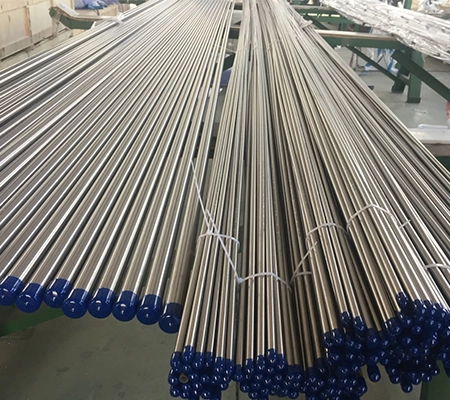
Secure plastic or metal end caps for plain and beveled ends
Thread protectors for threaded pipe
Protection that does not damage the bevel or sealing surface
Dry internal surfaces before capping
Suitable external temporary protective coating
Bundle separators and lifting points that prevent metal damage
Water-resistant identification tags
Additional moisture protection for sea freight
End caps should remain secure during normal handling but be removable without damaging the pipe. If internal cleanliness is critical, the packaging procedure should define how the bore is inspected and protected before shipment.
Marking and Bundle Identification
Marking requirements may include:
Manufacturer identification
Applicable standard and grade
Seamless manufacturing designation
Outside diameter and wall thickness
Heat number
Individual pipe number
Project and purchase-order number
Length and weight
Sour-service or low-temperature designation where required
The pipe list, bundle tags and MTC should use consistent identifiers so the receiving inspector can establish traceability without opening or rearranging every bundle.
Frequently Asked Questions
When is seamless line pipe preferred for smaller diameters?
Seamless pipe may be preferred when the owner specification requires it, when heavy-wall smaller diameters are needed or when the required grade and dimensions are commercially available through a qualified seamless route. The final decision depends on project engineering and procurement requirements.
Which documents should ship with each lot?
Typical documents include MTCs, chemical and mechanical test reports, impact or sour-service test results, heat-treatment records, NDT reports, hydrostatic test records, dimensional reports, pipe lists, inspection releases and packing lists.
How should pipe ends be protected?
Plain and beveled ends should use secure caps that prevent impact damage and contamination. Threaded ends require suitable thread protectors. The packing method should keep internal surfaces dry and protect markings throughout transportation.
Does seamless line pipe still require full-length NDT?
Seamless manufacture does not eliminate the need for NDT. The required method, coverage and acceptance criteria depend on the material standard, product level and project specification.
Does the grade confirm sour-service suitability?
No. Sour-service suitability also depends on chemistry, hardness, heat treatment, manufacturing quality, environmental limits and required HIC or SSC testing. The complete project specification must be reviewed.
Can a standard MTC replace the final document package?
Not for projects requiring additional procedures, test reports, traceability records or third-party inspection. The MTC is one part of the final manufacturing record book.
Should procurement send the entire line class to the supplier?
Send the applicable material requisition, datasheet and relevant line-class requirements. Remove unrelated confidential information where necessary, but retain every technical requirement that affects material, dimensions, testing, documentation or packing.
Build the Line Pipe Order Around the Project Requirements
A complete seamless line pipe order should define grade, product level, dimensions, end finish, service conditions, supplementary testing, traceability, project documentation and packing.
Sour-service and low-temperature requirements should be established before production. Testing methods, sampling frequency, acceptance criteria and purchaser witness points should be recorded in the approved ITP.
Buyers comparing stainless steel pipe manufacturers in China or carbon and alloy line pipe sources should evaluate the complete technical and documentation scope—not only grade, wall thickness and unit price.